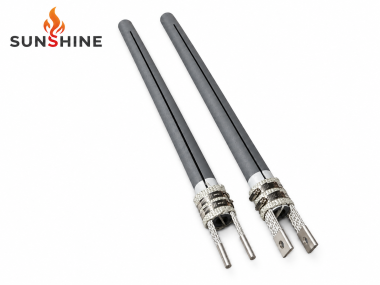
Horizontal and vertical orientation are the more common installation method. Special attention must be paid when mounting to ensure that the elements are not placed in tension. There should be adequate space to allow for the furnace and elements to expand and contract independently.
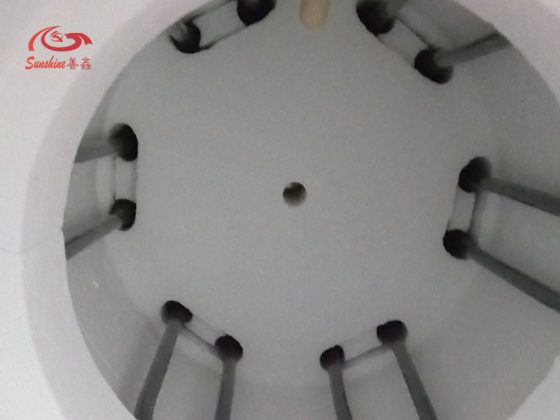
When mounting elements vertically, they must be supported on the lower end by electrically insulated supports, or from above using support pins on an isolating plate of sufficient strength to support the weight of the elements.Check the installation drawing to see how far the cold ends should extend beyond the furnace wall. See the SiC terminal photos for examples of clamps and braids.
- 1) Before installation, check the element resistance at the specified reference temperature and match the group to the tolerance for that circuit.
- 2) Поскольку элемент очень хрупок, будьте осторожны при установке и обслуживании, чтобы избежать повреждений.
- 3) At startup, follow the current limit and ramp settings specified for the elements and power supply.
- 4) To use the elements, you should prepare the adjustable transformer or silicon controlled transformer, voltage meter, current meter and auto control temperature meter etc. SiC element resistance can rise with use. If the power supply reaches its voltage limit, have a qualified technician check the element bank and circuit against the furnace wiring diagram. See the Kanthal Globar installation guide for examples of terminal connections and mounting.
- 5) In the course of long operation of the furnace, if any individual heating element is damaged owing to certain reasons and should be changed, you should replace it with proper one whose resistance value corresponds to that of the old one, never use a new heating element random. If the heading element is much damaged or its resistance value increases too much and cannot reach the furnace temperature, it is better to replace the heating elements with mew ones. Check the furnace maintenance manual before reusing any removed elements.
- 6) Follow the furnace manufacturer’s drying schedule before bringing new or damp refractory into service.
- 7) If the load releases water vapor or fumes, follow the furnace manufacturer’s ventilation requirements.