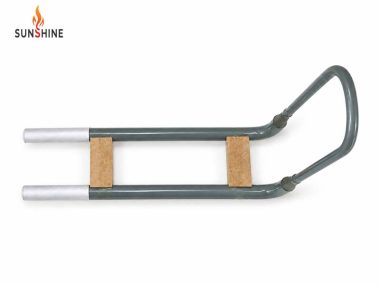
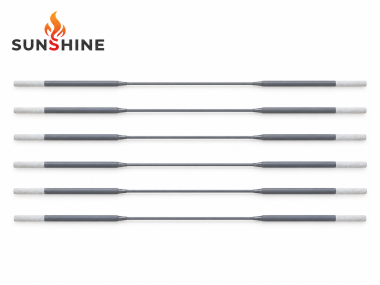
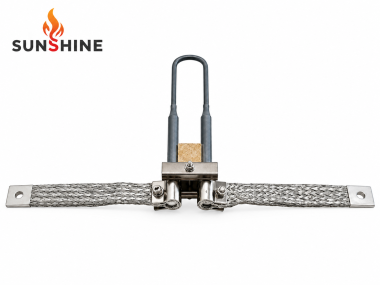
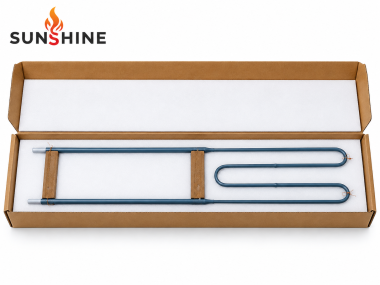
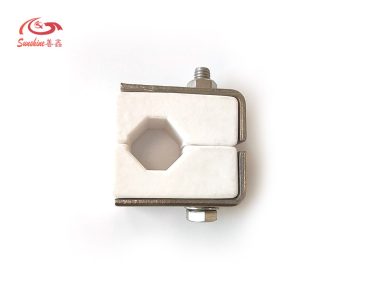
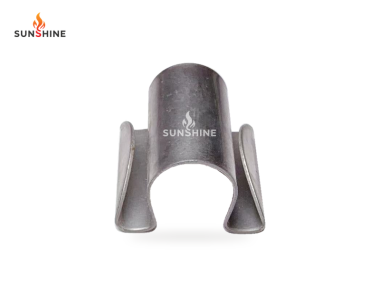
MoSi2 heater rod is a type of molybdenum disilicide resistance element that is used for high-temperature heating. In air, a protective silica layer forms on the hot element surface.
Check these properties when investigating a failure:
1. MoSi2 elements are brittle when cold and can be damaged by impact.
2. Allow the element to move as it heats and cools.
3. MoSi2 resistance increases with temperature. Its lower cold resistance can draw high current at startup if current is uncontrolled.
4. Surface load is the power per unit of heated surface area, usually expressed in W/cm². The Kanthal Super temperature and surface load charts, p. 12 show how the load limit changes with furnace temperature.
5. Check the element temperature limit for the grade and furnace atmosphere.
Checking for damage from excessive surface load
أسباب الأضرار:
Excess surface load can overheat the hot zone. A fracture at the U-bend can also have mechanical causes. Check the operating records and mounting before assigning a cause.
موقع الأضرار:
الجزء بشكل حرف U
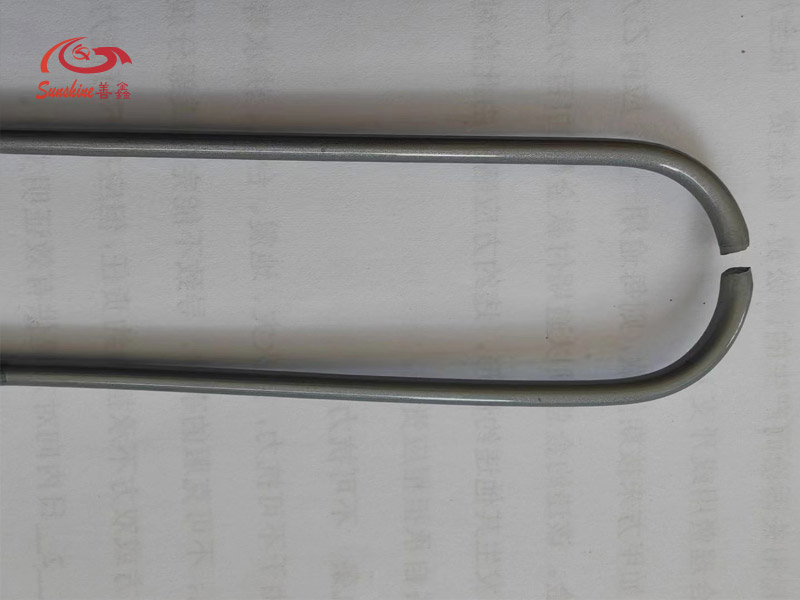
In this example, the visible damage is at the U-bend. The appearance alone cannot establish the temperature or surface load at failure.
الحل:
1. Divide the power going to the element by its heated surface area. For example, 400 W over 100 cm² gives 4 W/cm². Compare the result with the limit for your element grade and furnace temperature. See how to calculate the heated area of a U-shaped element.
2.The element shape and size, which determine the heat distribution and mechanical stress of the element. You should choose an element shape and size that suits your furnace geometry and heating requirements. Confirm the rating before selecting a replacement.