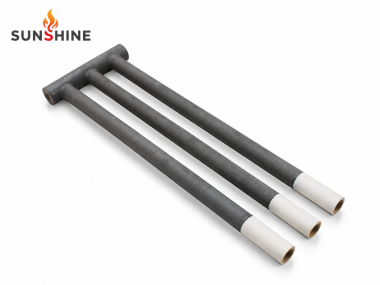
How GDW-Type Three-Phase SiC Heating Elements Are Used in Float Glass Tin Baths
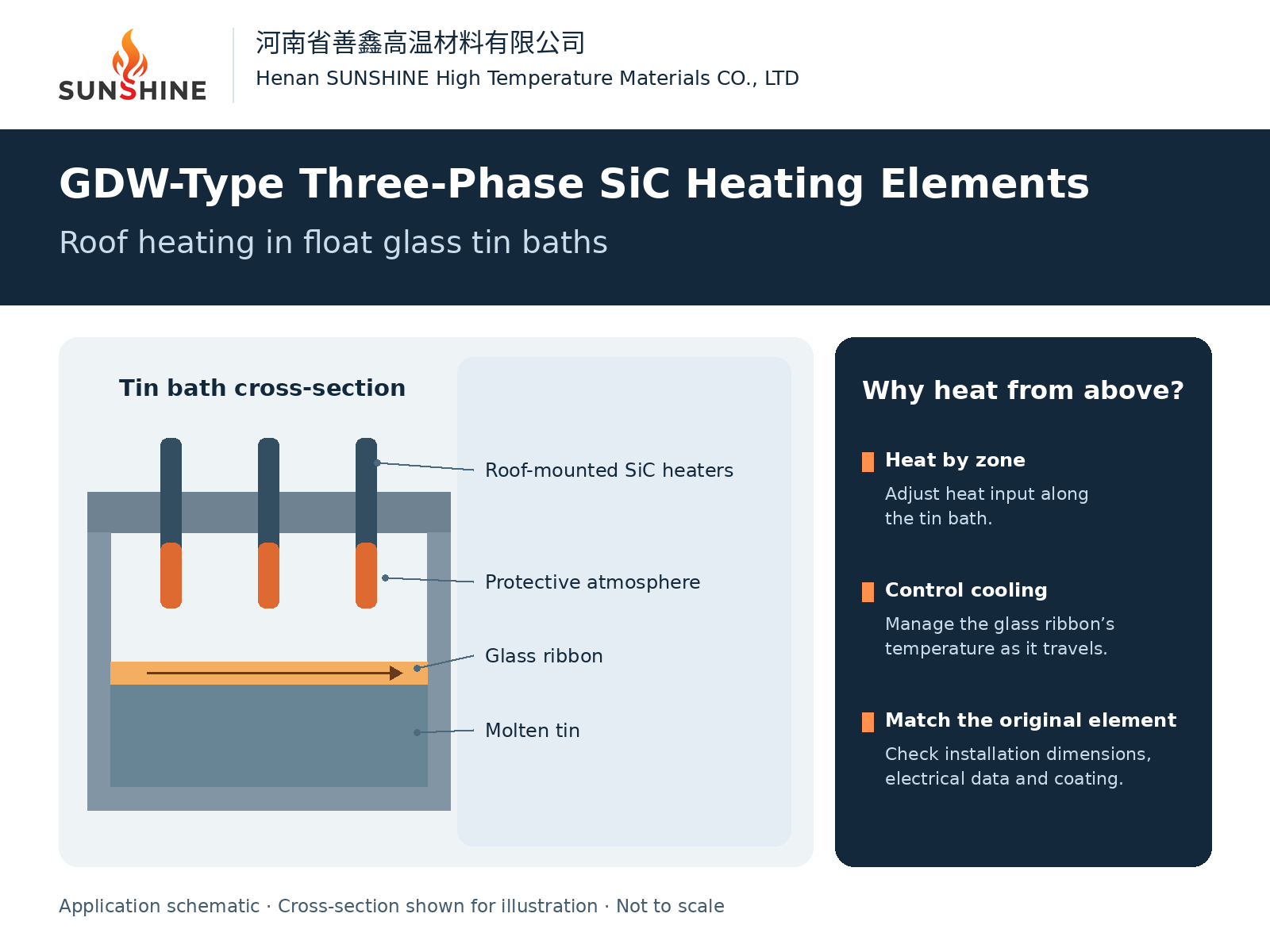
In float glass production, the temperature of the glass ribbon must be controlled as it travels along the tin bath. GDW-type three-phase silicon carbide (SiC) heating elements are used for roof heating in compatible tin bath designs. Installed above the glass ribbon, they supply heat to individual zones to help control the ribbon’s cooling rate during forming.
Why the Tin Bath Uses Zoned Roof Heating
Molten glass enters the tin bath and spreads over the surface of the molten tin to form a continuous ribbon. The ribbon cools progressively as it moves toward the exit. Roof-mounted SiC elements allow operators to adjust heat input by zone and maintain the temperature profile needed for glass forming. This temperature profile is one of the factors that influence the finished glass thickness.
What Is a GDW-Type Heating Element?
GDW is a designation used for a three-phase, three-leg W-type SiC heating element. In a roof-mounted installation, the hot zone extends into the tin bath chamber above the glass ribbon. For a replacement order, the GDW designation identifies the general element design. The original drawing and electrical data determine whether the replacement fits the roof assembly and matches the zone’s power supply.
When Should You Specify a Glazed GDW Element?
A float glass tin bath typically operates under a protective nitrogen–hydrogen atmosphere. Vapors released during production, including sodium-bearing vapors from the glass, can also affect the heating elements. A purpose-designed glaze can help reduce attack from tin bath vapors. If your original element has a protective coating, include the coating specification or original part number in your inquiry so it can be reviewed alongside the operating conditions.
What to Provide When Requesting a Replacement
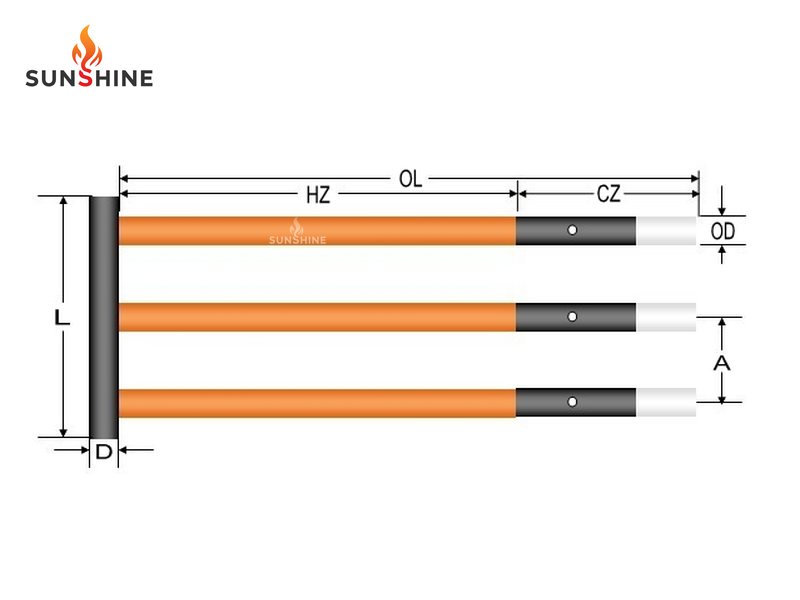
- Element geometry — Overall length, rod diameter, hot-zone length, cold-end length and center-to-center spacing between the three legs
- Mounting and terminals — Roof mounting details, terminal arrangement and clearances
- Electrical requirements — Rated voltage and power, specified resistance with its measurement temperature, and the original connection diagram
- Operating conditions — Tin bath zone, operating temperature, protective atmosphere and any glaze or coating requirement
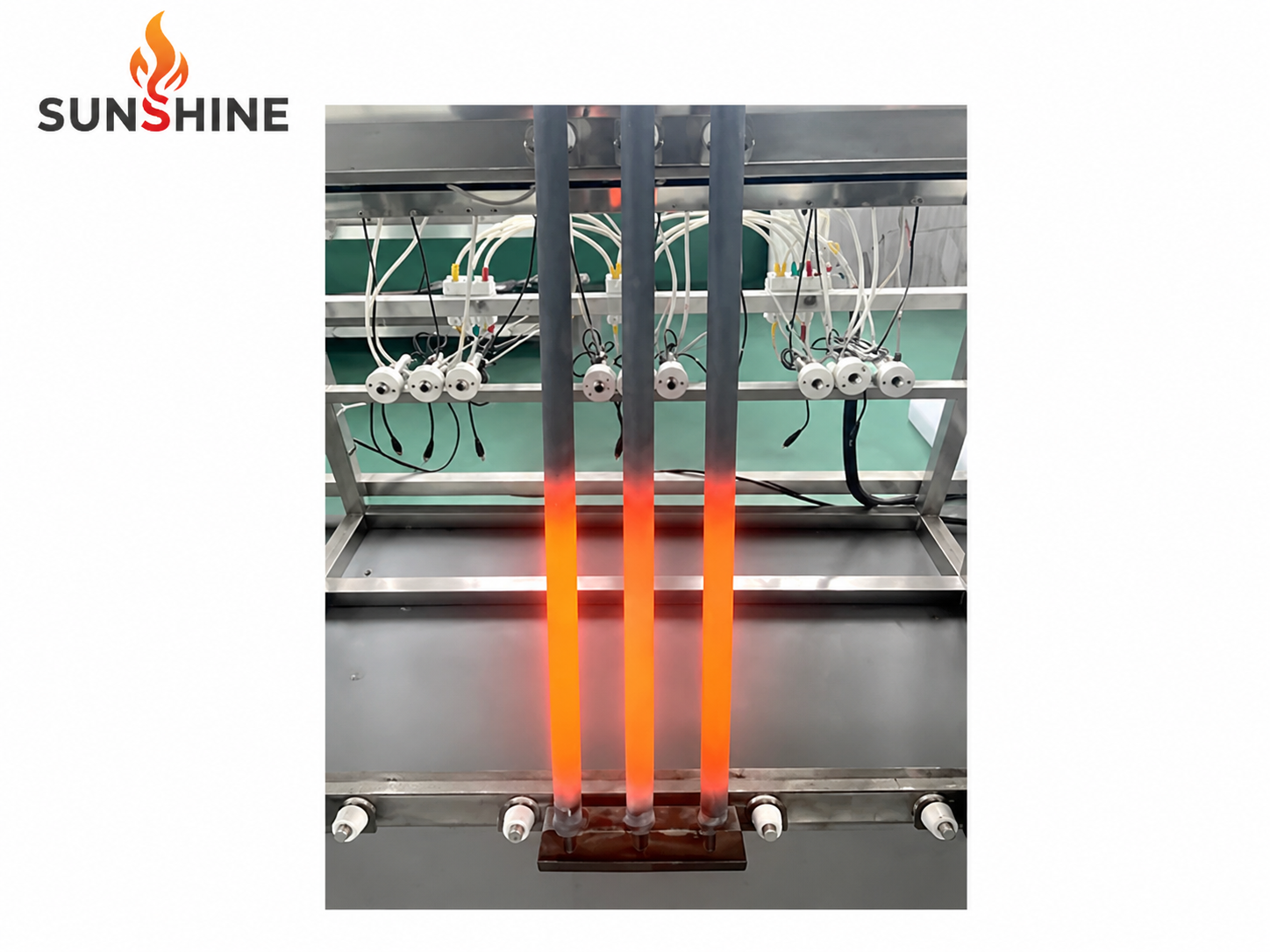
For a GDW-type SiC heating element quotation, send SUNSHINE the original drawing or part number, clear photos of the element and terminals, and the electrical specifications. These details help us review the replacement against your tin bath’s installation and operating requirements.
A customer once sent us [a photo or drawing of the original element] and asked for a replacement GDW-type silicon carbide (SiC) heating element mounted in the roof of a float glass tin bath. We first reviewed [the specifications the customer had provided], then asked for [the missing details] so we could verify [the relevant mounting or electrical requirements].Once we received all the dimensions specified in the drawing, we confirmed the correct GDW-type three-phase SiC heating element model for the customer and proceeded with production as planned.
| Symbol | Dimension |
|---|---|
| OL | Overall Leg Length |
| HZ | Hot Zone Length |
| CZ | Cold Zone Length |
| OD | Outside Diameter |
| A | Center-to-Center Spacing |
| L | Overall Bridge Length |
| D | Bridge Diameter |
Henan SUNSHINE High Temperature Materials CO., LTD